Things to Do in Malacca in February
February weather, activities, events & insider tips
High Season · Book Early
February Weather in Malacca
Long-run averages for February
91°F (32°C)
High Temp
75°F (23°C)
Low Temp
3.1 inches (79 mm)
Rainfall
78%
Humidity
6
Rainy Days
13
Sunny-Day UV
⚠ February UV is extreme. Equatorial intensity. Unprotected skin burns in under twenty minutes at midday. White-painted colonial buildings around Dutch Square reflect exposure from unexpected angles. Reapply sunscreen every two hours outdoors. Seek shade between 11am and 3pm.
⚠ Brief thunderstorms hit hard. Little warning. Six or so rainy days in February. Twenty to forty minutes of heavy rain and gusty winds. Seek solid shelter. Skip the trees. Lightning risk is real. Visitors from temperate zones underestimate it.
Making the most of February in Malacca? Browse tours and activities in Malacca on GetYourGuide.
Is February Right for You?
Weigh the advantages and considerations before booking
Advantages
- + February is Malacca's driest month by a comfortable margin, with just 79 mm (3.1 inches) of rain against November's 234 mm (9.2 inches). You can walk the full UNESCO heritage zone, from A Famosa to Heeren Street and back, without ducking into shophouses every half hour to wait out a downpour.
- + Humidity drops to its annual low of 78 percent, which in equatorial Malaysia terms means mornings before 10am are comfortable enough for the uphill climb to St. Paul's Church ruins without feeling like you are breathing through a wet cloth. By Malacca standards, this is as good as it gets.
- + Chinese New Year celebrations fill the first two weeks of the month, and Malacca's version is unlike anywhere else in Malaysia. Five centuries of Chinese settlement and the city's Peranakan heritage produce a festival layered with traditions you will not find in Kuala Lumpur or Penang, from Nyonya reunion feasts blending Chinese and Malay ingredients to the Chap Goh Mei orange-tossing ceremony along the river.
- + The shoulder days just before and after the Chinese New Year festivities offer February's excellent dry weather without the festival crowds or the accommodation premium, making the last ten days of February one of the smartest booking windows for Malacca all year.
Considerations
- − Chinese New Year week draws enormous domestic crowds from Kuala Lumpur, only about 150 km (93 miles) south on the expressway. The heritage district around Jonker Street and Dutch Square becomes shoulder-to-shoulder, accommodation along the river fills weeks in advance, and rates during the festival fortnight climb well above the monthly average.
- − Even at its annual mildest, 32°C (91°F) with 78 percent humidity means the midday heat is still punishing. The shade between heritage sites is sparse, the laterite stone walls of A Famosa radiate stored heat, and you will need strategic retreats into air-conditioned shophouse museums or kopitiam cafes by noon.
- − Many family-run establishments close for three to five days around Chinese New Year, and these tend to be the very places worth eating at: the old Nyonya kitchens, the chicken rice ball specialists, the provision shops that have occupied the same shopfront for decades. If your dates land on the festival itself, your best dining options temporarily narrow.
Settled on February? Compare hotel prices in Malacca for your dates on Trip.com.
Best Activities in February
Top things to do during your visit
February settles over Malacca like a reprieve. The city catches its driest stretch of the year, with rainfall averaging just 3.1 inches, roughly a third of what November dumps on the same red-roofed shophouses and laterite fortifications. Afternoons climb to around 32°C, and the air loses some of the clinging weight that defines the wetter months. Mornings along the Malacca River feel almost crisp by equatorial standards, bottoming out near 23°C before dawn heats the terracotta tiles of Jonker Street. The result is long, walkable days where you can linger in the open corridors of Stadthuys without ducking under awnings every twenty minutes. If you plan to eat your way through Malacca, and you should, because this is a city where the char kway teow smells of rendered lard and dark soy from half a block away, February's relative dryness means the hawker stalls along Jalan Bunga Raya and the open-air tables near the Maritime Museum stay operational well into the evening without the monsoon interruptions that plague the final quarter of the year. The city's layered colonial skeleton is easier to absorb at this pace. Portuguese ramparts give way to Dutch administrative halls, which in turn abut Peranakan townhouses with ornate plaster facades in shades of celadon and coral. In February, the light is direct through the midday hours, carving hard shadows under the eaves of Cheng Hoon Teng Temple, where incense coils the thickness of a forearm smolder from the rafters and fill the courtyard with sandalwood haze. The Malacca Straits, visible from the hillside ruins of A Famosa, take on a flat, silvered quality under the February sun, container ships crawl across the horizon while fishing boats with painted eyes on their prows bob closer to shore. This is a city best understood on foot, at the deliberate speed that heat imposes: a few hours of walking, then retreating to a kopitiam where the ceiling fan ticks overhead and the kopi comes thick, sweet, and pulled through a cloth sock filter until the crema froths.
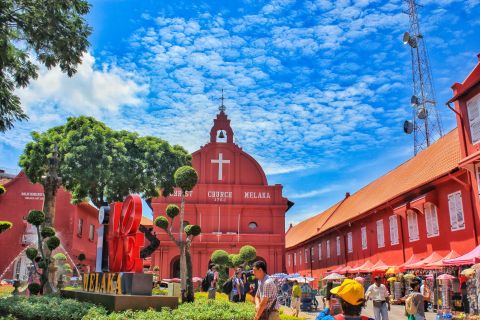
From Kuala Lumpur: Historical Malacca Tour with Lunch option
culturalThis full-day guided route from Kuala Lumpur deposits you into the historical heart of Malacca, threading through the Dutch-era civic buildings clustered around the salmon-pink Stadthuys, the weathered stone gateway of A Famosa, and the ornamental shopfronts of Jonker Street where the smell of pineapple tarts and roasted chestnuts drifts from open doorways. A lunch option adds a proper introduction to Malacca's Peranakan kitchen, expect tangy assam fish and rich, coconut-laced laksa served in thick ceramic bowls. The drive from KL takes roughly two hours each way through palm-oil plantations that stretch flat and green to the horizon, and the guided commentary fills in the Portuguese, Dutch, and British chapters that gave Malacca its architectural patchwork.
The most efficient way to decode five centuries of colonial trade history in a single day, with a guide who can explain why a Malay port city has a Portuguese church and a Dutch town hall.
Insider tip: Request a window seat on the left side of the vehicle heading south from KL, you get unobstructed views of the Titiwangsa Range as it recedes, and the coach air conditioning runs strongest on that side.
This month: February's low rainfall, the lightest of any month, means the open-air sections of A Famosa and the riverside walk are far less likely to be cut short by downpours compared to visits later in the year.
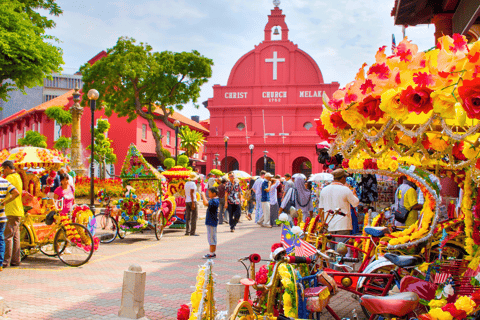
Kuala Lumpur: Malacca Day Trip with River Cruise and Lunch
cruiseThis day trip pairs Malacca's land-based heritage circuit with a cruise along the Malacca River, where the narrow waterway winds between shophouses whose rear walls have been painted into enormous murals, geometric Peranakan motifs, fishing boats, hornbills, their colours reflected and warped in the dark water below. The boat passes beneath pedestrian bridges strung with red lanterns and glides past kampung houses on stilts where laundry flaps in the river breeze and cats doze on weathered jetties. Lunch is included, and the itinerary carves out time for Jonker Street, where the tiled five-foot walkways shelter vendors selling beaded Nyonya slippers and hand-rolled popiah skins thin enough to read through.
The river cruise reframes Malacca from the water, revealing a back-alley perspective of the heritage zone that walking alone cannot deliver, you see the city the way trade goods once entered it.
Insider tip: Sit at the stern of the cruise boat. The bow section catches engine fumes on slower stretches, while the rear gets cleaner air and a wider photographic angle on the mural walls.
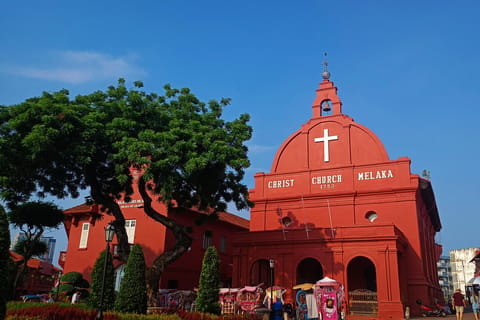
From Kuala Lumpur: Full-Day Tour to Malacca
day_tripA full-day circuit from Kuala Lumpur that covers the essential Malacca landmarks, St. Paul's Church on the hilltop, where roofless stone walls frame the sky and old Dutch gravestones lean against the interior. The cramped, aromatic lanes of Chinatown where temples burn joss paper in iron drums on the sidewalk. And the Baba Nyonya Heritage Museum, a restored Peranakan townhouse where blackwood furniture inlaid with mother-of-pearl crowds every room. The pace is unhurried enough to absorb the way Malacca's layers overlap: a Hindu temple shares a wall with a mosque, a Portuguese cannon points at a Chinese clan hall, and all of it sits within a fifteen-minute walk.
Covers the full UNESCO core zone in a single structured day, good for travelers who want complete historical context without self-navigating the city's tangled heritage district.
Insider tip: Wear shoes you can slip on and off quickly, multiple temple and museum entries require removing footwear, and fumbling with laces in the heat costs you both time and patience.

°Chauffeur: Malacca to Singapore Van Transfer
otherThis private van transfer between Malacca and Singapore eliminates the logistical headache of connecting two cities that sit roughly three hours apart by road, separated by the Johor causeway crossing. The vehicle collects you from your Malacca accommodation, useful if you are staying in the heritage zone where narrow lanes make hauling luggage to a bus terminal an exercise in humid frustration, and delivers you to a Singapore address. The route tracks south through Johor's palm plantations and industrial estates before the skyline of Singapore materialises through the windshield haze, glass towers stacking up beyond the strait.
A door-to-door transfer that absorbs the border-crossing wait and luggage logistics, converting a potentially exhausting multi-stage bus journey into a seated, air-conditioned corridor between two destinations.
Insider tip: Carry your passport in a readily accessible bag pocket, the Johor immigration checkpoint requires disembarking the vehicle, and having documents buried in checked luggage creates delays for the entire van.

Malacca City To Kuala Lumpur City En-route Putrajaya Tour
guided_experienceThis transfer-tour hybrid routes you from Malacca to Kuala Lumpur with a detour through Putrajaya, Malaysia's administrative capital, a planned city of monumental mosques, sweeping boulevards, and government palaces set around a man-made lake. The stop at Putrajaya Mosque, with its rose-granite facade and soaring dome visible across the water, adds architectural contrast to a day that began among Malacca's cramped colonial lanes. The cool, marble-floored interior of the mosque has a tactile break from the heat outside, and the lakeside promenade smells of cut grass and warm stone. You arrive in KL having covered two cities rather than lasting a straight highway transfer.
Transforms a routine city-to-city transfer into a sightseeing segment, slotting Putrajaya's modern Islamic architecture between Malacca's colonial heritage and KL's commercial sprawl.
Insider tip: Putrajaya Mosque requires modest dress, long sleeves and covered legs, and robes are available at the entrance. But they run large and slow you down. Wearing your own lightweight long clothing saves time and photographs better.

Malacca Historical and Heritage Tour with Professional Tour Guide
culturalA guided walking tour of Malacca's heritage core led by a professional local guide who calibrates the narrative beyond the standard colonial timeline into the mercantile, religious, and culinary layers that make this city distinct. The route covers the dense strip between the river and Bukit St. Paul, passing through Harmony Street, where a mosque, a Hindu temple, and a Chinese temple stand within earshot of each other's call to prayer, bells, and drum, and into the Peranakan quarter, where the guides typically unlock details about the ceramic tile work on townhouse facades: each pattern signals the family's ancestral province in Fujian. The pace is slow enough to catch the smell of charcoal-grilled satay from the side lanes and the sound of songbirds in bamboo cages hung from shophouse eaves.
The professional guide reframes landmarks you could walk past in ignorance, the drainage channels that doubled as Portuguese defensive moats, the clan house doorways sized to force visitors to bow upon entry.
Insider tip: Ask the guide to include the back lane behind Jalan Tun Tan Cheng Lock, where unrenovated Peranakan houses show the original lime-plaster walls and carved timber air vents that the museum-facing facades have painted over.
Where to Stay in Malacca in February
Hand-picked hotels across price tiers for February travellers.
Public Holidays in February
Dates that affect opening hours, transport and crowds
Chinese New Year
Observed nationwide as a public holiday. This date depends on observation rather than a fixed calendar, so confirm it locally closer to the time. Date not yet confirmed.
Chinese New Year (Second Day)
Observed nationwide as a public holiday. This date depends on observation rather than a fixed calendar, so confirm it locally closer to the time. Date not yet confirmed.
Chinese New Year (Second Day)
Observed nationwide as a public holiday. Granted in lieu when the holiday falls at a weekend. This date depends on observation rather than a fixed calendar, so confirm it locally closer to the time. Date not yet confirmed.
Eid al-Fitr
Observed nationwide as a public holiday. This date depends on observation rather than a fixed calendar, so confirm it locally closer to the time. Date not yet confirmed.
Eid al-Fitr (Second Day)
Observed nationwide as a public holiday. This date depends on observation rather than a fixed calendar, so confirm it locally closer to the time. Date not yet confirmed.
Eid al-Fitr (Second Day)
Observed nationwide as a public holiday. Granted in lieu when the holiday falls at a weekend. This date depends on observation rather than a fixed calendar, so confirm it locally closer to the time. Date not yet confirmed.
Packing Checklist
Bookmark this page — your progress is saved between visits
Need the full list with shopping links?
Climate-specific gear, brand recommendations, and what to leave at home.
View Malacca Packing List →Essential Tips
Insider knowledge and common pitfalls to avoid
Insider Knowledge
The morning version of Jonker Street, before it transforms into the night market zone, is where Malacca's locals eat. Between roughly 6am and 11am, the permanent shopfront kitchens along Jalan Hang Jebat serve chicken rice balls, cendol pooled with dark gula melaka syrup over shaved ice, and bowls of Nyonya laksa in coconut broth with a belacan kick that hits the back of your throat. These morning spots are quieter, the food is cooked to a standard the evening stalls rarely match, and you will be eating alongside people who have been coming to the same counter for years.
Malacca's heritage zone is compact enough to cover end to end in about forty minutes, roughly 2.5 km (1.6 miles), but most visitors never leave the Jonker Street and Dutch Square axis. Cross the river to the south bank and you enter a different city: Kampung Morten with its timber stilted houses, the Portuguese Settlement at the eastern end of the waterfront where descendants of sixteenth-century colonists still live, and residential streets where the shophouses have not been converted into boutique anything. This is where Malacca still sounds and smells like itself.
If your visit overlaps with Chinese New Year, the strongest lion dance performances happen not on Jonker Street but outside the clan association halls on Jalan Tokong and in the lanes behind Heeren Street. The Jonker Street shows are staged for the tourist crowd. The clan hall performances are staged for the community, with troupes competing in skill and intensity, and the difference is impossible to miss once you have seen both.
The Straits of Malacca waterfront west of the maritime museum empties out on weekday evenings after sunset. The fishing boats come in close enough to hear diesel engines ticking over, the reclaimed-land mosque glows under floodlights, and container vessels move in slow procession across the shipping lanes on the horizon. Nobody photographs this stretch of Malacca. It is the view that makes you understand why traders, admirals, and colonists fought over this narrow passage for five hundred years.
Avoid These Mistakes
Arriving expecting good beaches. Malacca faces the narrow Straits, and centuries of land reclamation have left the shoreline silted and the water an opaque brown that no amount of optimism will turn turquoise. The nearest swimmable beach is Tanjung Bidara, about 30 km (19 miles) north, and even that is a modest strip of sand. Malacca is a heritage and food city, full stop. If clear water matters to you, head for the east coast or the islands off Borneo instead.
Jonker Street on a weeknight will confuse you. The famous night market vanishes entirely. It runs Friday, Saturday, and Sunday evenings only. Monday through Thursday brings antique shops and shuttered stall frames. The transformation is that complete. First-time visitors often double-check their address.
Skip the car. Skip the motorbike. The UNESCO heritage core is a tight grid of one-way streets, pedestrianized lanes, and passages too narrow for anything wider than a trishaw. Park outside. Walk in. This is the only approach that works. The alternative ends in frustration and a wrong-way fine. The heritage area spans roughly 2.5 km (1.6 miles) across. You can cover it on foot. February heat is manageable with kopitiam stops in the shade.
Short on time? See day trips around Malacca on GetYourGuide.
Ready to plan your trip to Malacca?
Now that you've got the research covered, here's where to go next.
Explore More Activities in Malacca
Didn't see anything interesting yet?
Browse Viator's full catalog of tours, day trips, food experiences, and private guides in Malacca.
See All Malacca Tours on Viator