Things to Do in Malacca
Five centuries of conquerors, and the grandmothers still run the kitchens
Top Things to Do in Malacca
Find activities and tours you'll actually want to do. Book through our partners -- no booking fees.
Plan Your Trip
Essential guides for timing and budgeting
Climate Guide
Best times to visit based on weather and events
View guide →Day Trips
The best excursions and nearby destinations worth the journey
Explore day trips →Where to Stay
Best neighbourhoods, hotel picks, and booking tips
Find hotels →Travel Insurance
What's required, what coverage matters, and how to get a quote
Read guide →What to Pack
Climate-specific gear, essentials, and what to leave at home
See packing list →When Should You Visit Malacca?
Tap a month for weather, crowds, and highlights
View full year-round climate guide →Explore Malacca
A Famosa Porta De Santiago
Landmark
Cheng Hoon Teng Temple
Landmark

Melaka Straits Mosque Masjid Selat
Landmark
St Pauls Church
Landmark
Stadthuys Dutch Stadthuys Museum
Landmark
Banda Hilir Portuguese Settlement
District
Dutch Square Stadthuys Area
District
Jonker Street Chinatown
District
Kampung Morten
District
Little India Kampung Kling
District
Your Guide to Malacca
About Malacca
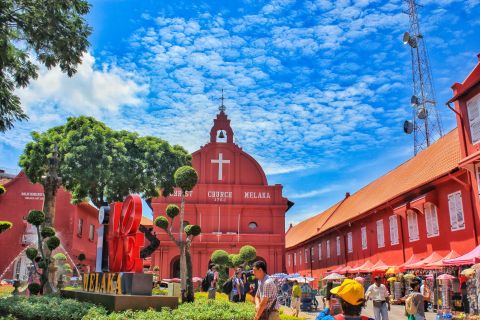
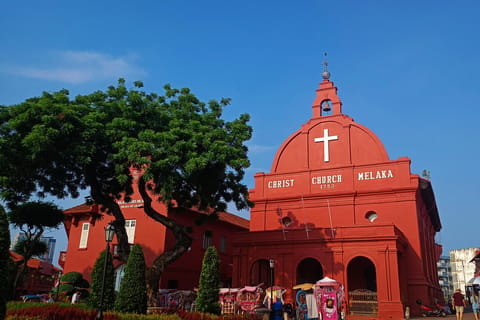
The heat finds you first in Malacca. Not the gentle warmth of a tropical postcard but the thick, salt-weighted humidity that rolls off the Straits and settles into the shophouse lanes like something physical. By the time you've crossed Dutch Square, where the Stadthuys and Christ Church sit in their terracotta-red paint like a colonial fever dream dropped onto the equator, your shirt is already done for.
This is the trade-off Malacca quietly demands, and it's worth making. Walk south along Jalan Tun Tan Cheng Lock, where Peranakan mansions with carved wooden doors and pastel shutters line both sides of a street barely wide enough for a car, and the smell of buah keluak simmering in tamarind drifts from kitchens that haven't changed their recipes since the Straits Chinese first fused Hokkien and Malay cooking three centuries ago.
Duck into Cheng Hoon Teng, the oldest functioning Chinese temple in Malaysia, where the incense smoke is so dense it turns the afternoon light gray. Then follow the river north past walls splashed with murals until you hit Jonker Street, which on Friday and Saturday nights transforms into a night market dense enough that forward motion becomes optional.
Hawker stalls sell chicken rice balls, the Malacca-specific version where the rice is compressed into smooth spheres the size of golf balls, and cups of cendol with gula melaka so dark and mineral-rich it tastes closer to molasses than sugar. Malacca is compact enough to walk in a day, small enough to feel knowable, and layered enough, Portuguese fortress ruins on the hill, Dutch administrative buildings at the base, British shophouses filling everything in between, that a second day reveals what the first one missed.
Travel Tips
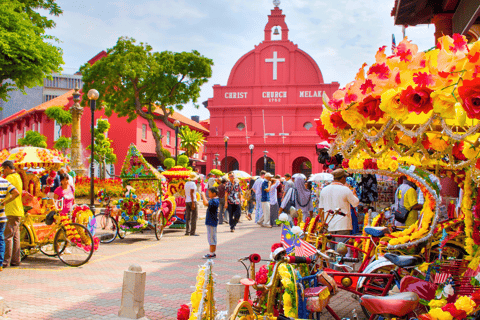
Transportation: Malacca's heritage core is small enough to cover on foot. Walking is the best way to navigate the shophouse lanes between Jonker Street and St. Paul's Hill. For anything beyond the old town, download Grab before you arrive. It's the only reliable ride option, and fares to outlying areas like Ayer Keroh tend to be surprisingly cheap. From Kuala Lumpur, express coaches from TBS terminal at Bandar Tasik Selatan take about two hours and drop you at Melaka Sentral, a short Grab ride from the heritage zone. The flower-covered trishaws blasting pop music through the streets are priced for tourists and move slower than walking. Entertaining to watch from a cendol stall, less so to ride.
Money: Malaysia runs on the ringgit, and Malacca is one of the cheapest stops in a country that's already affordable by Southeast Asian standards. Most heritage-zone restaurants and shops take cashless payment through Touch 'n Go eWallet or GrabPay, though the night market stalls on Jonker Street are still largely cash-only. Hit an ATM before Friday evening or you'll be watching everyone else eat. Credit cards work at hotels and larger restaurants but foreign transaction fees add up fast on small purchases. The real savings come from eating where locals eat. The hawker centers along Jalan Bunga Raya serve full meals for what a coffee costs at the tourist spots around Dutch Square.
Cultural Respect: Malacca's Malay, Chinese, and Indian communities share the old town closely. Mosques, temples, and churches sit within a few blocks of each other and the boundaries between them are porous. Remove your shoes before entering any place of worship, whether that's Kampung Kling Mosque, a Hindu temple at the edge of Little India, or Cheng Hoon Teng. At mosques, cover shoulders and knees, and women should carry a lightweight scarf. During Ramadan, eating visibly near mosques during daylight hours is considered rude. The Peranakan families here tend to be more formal than you'd expect. A greeting in Malay, even a simple selamat pagi, opens doors that English alone won't.
Food Safety: Malacca's hawker food is the point of coming here, and the hygiene at well-trafficked stalls is better than the bare lightbulbs and plastic stools suggest. The chicken rice ball shops along Jonker Street have been serving for decades. High turnover keeps everything fresh. Satay celup, Malacca's communal hotpot where you grab skewered ingredients from a fridge and cook them yourself in a bubbling peanut-chili broth, is safe by design since you control the cooking. Stick to stalls with visible flames and steady crowds. The cendol carts near the river use shaved ice, and the popular ones cycle through supply fast enough that freshness is a given. Tap water isn't drinkable. But the ice at hawker stalls is commercially produced and safe.
When to Visit
Malacca sits close enough to the equator that the temperature barely shifts between January and December. Expect highs around 31-33°C (88-91°F) year-round, with nighttime lows that rarely drop below 23°C (73°F). The real variable isn't heat but rain. The northeast monsoon arrives between November and February. November through December are the wettest months, when afternoon downpours can last two to three hours and turn the lower stretches of Jonker Street temporarily impassable.
These aren't gentle tropical showers. The rain comes in sheets heavy enough to make umbrellas decorative. Mornings are often clear even during monsoon season. The crowds thin noticeably. Hotel rates during these months drop well below peak-season pricing, which makes the trade-off worth considering if you're willing to plan sightseeing around the weather.
March through May brings the inter-monsoon period. Expect shorter, sharper thunderstorms that usually roll in late afternoon and clear by evening. Temperatures edge toward 32-34°C (90-93°F), and the humidity hits its most oppressive. This is when the heritage zone feels like walking through warm soup. The upside is that the shoulder season keeps accommodation rates moderate. The weekend night market stays manageable rather than suffocating.
June through September is likely your best window. Rainfall drops to its lowest. The southwest monsoon barely registers in Malacca compared to the east coast. While the heat remains relentless, slightly lower humidity makes a noticeable difference. This coincides with Malaysian school holidays, so Jonker Street fills up on weekends.
Hotel rates in the heritage zone climb accordingly. Book accommodation well ahead for Friday and Saturday nights during this stretch.
Chinese New Year, typically falling in late January or February, transforms Malacca into one of the best places in Southeast Asia to experience the festival. The old town's Chinese population has celebrated here for centuries. The lantern displays strung along the river and lion dances winding through the shophouse streets feel earned rather than staged.
Hari Raya Aidilfitri draws Malay families from across the peninsula. The kampung houses in Kampung Morten open their doors to visitors with trays of kuih and sweet tea. Both festivals push accommodation rates up sharply. Rooms near the heritage zone book out weeks ahead. If you're timing a trip around one, lock in your stay early and accept the premium. The atmosphere more than justifies it.
More Ways to Experience Malacca
Tours, day trips, and local experiences curated by on-the-ground operators.
Didn't see anything interesting yet?
Browse Viator's full catalog of tours, day trips, food experiences, and private guides in Malacca.
See All Malacca Tours on Viator